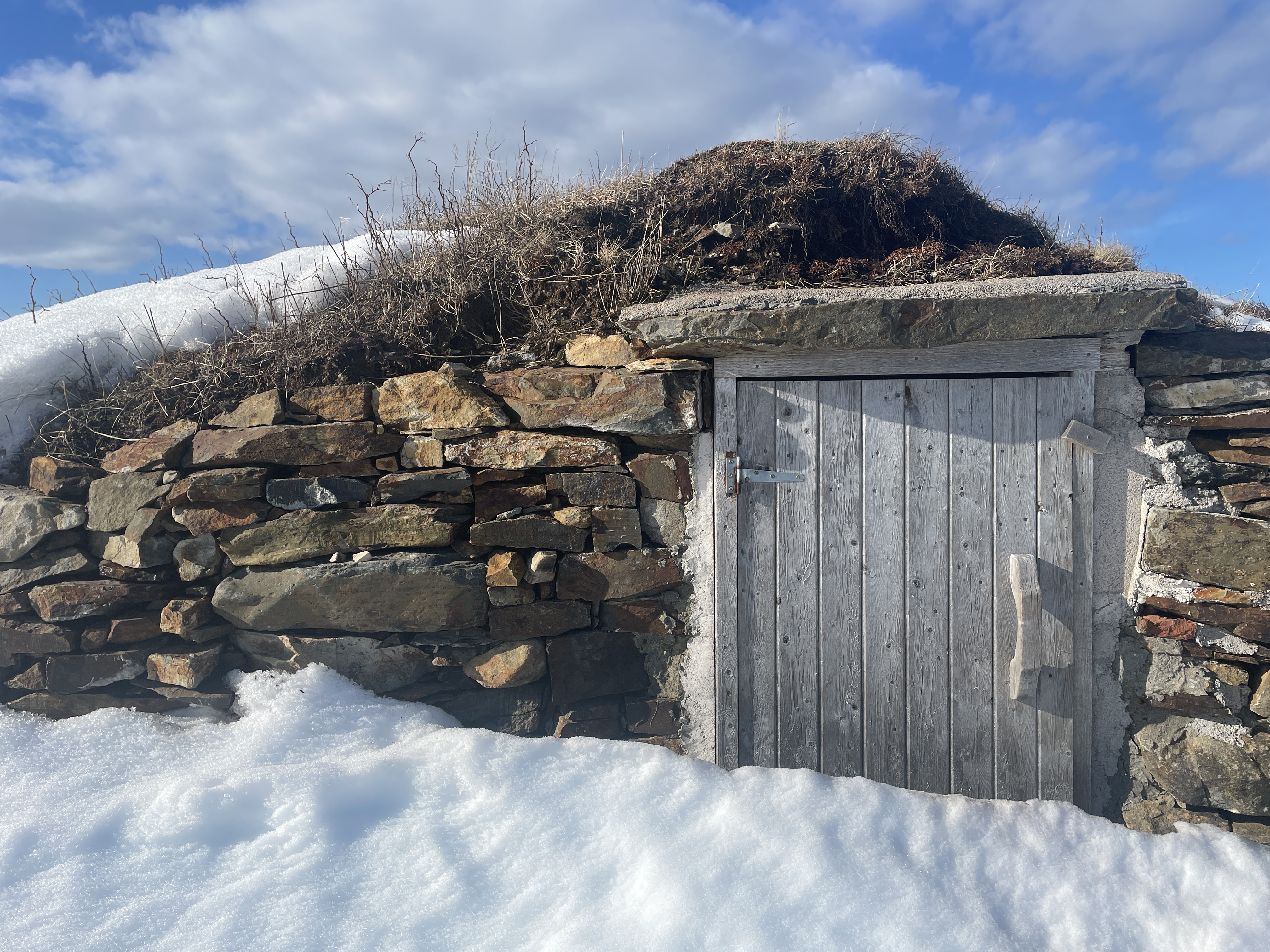
What a cellar provides
Below-ground spaces benefit from the thermal mass of surrounding soil, which stabilises temperature considerably compared to above-ground structures. In central Poland, undisturbed ground at 1.5 m depth maintains temperatures between 6 °C and 12 °C year-round, depending on location and soil composition.
This range is below the threshold at which most post-harvest enzymatic activity proceeds at normal speed, slowing ripening and decay significantly. It is, however, warmer than true refrigeration — so produce placed in a cellar continues to age and change, just slowly.
Temperature zones within a cellar
Not all parts of a cellar are equally cold. The coldest area is typically at floor level against the earth wall furthest from the entrance. Heat from the building above creates a gradient, with the ceiling being the warmest point. This matters for what goes where.
- 4–6 °C (cold zone, floor level): Suitable for apples, pears, and fermented products in jars. Also appropriate for potatoes once cured, though they should not freeze.
- 6–10 °C (mid zone): Root vegetables — carrots, parsnips, beetroot, celeriac — stored in boxes of slightly damp sand or peat.
- 8–12 °C (upper shelves): Dried goods in sealed containers, onions, garlic. Onions and garlic need low humidity and good airflow — conditions that often conflict with root vegetable storage, so they should be kept in separate areas or on elevated shelves.
Humidity management
Root vegetables keep best at 90–95% relative humidity. At lower humidity, they desiccate — losing water weight and becoming soft. At humidity approaching saturation in a cool space, condensation on cold surfaces can promote mould on produce and rot in wooden shelving.
Storing root vegetables in boxes filled with slightly moistened sand or peat provides a micro-environment of high humidity around the roots without soaking the cellar as a whole. The sand should feel damp but not wet — able to hold its shape when squeezed without dripping.
Onions and garlic perform the opposite: they need humidity below 65% to prevent sprouting and mould. Mesh bags or slatted crates hung from ceiling beams, away from the damp floor, are standard in traditional Polish cellars.
Ventilation
A cellar without any ventilation accumulates CO₂ from respiring produce and ethylene from ripening fruits, both of which accelerate decay. A simple ventilation arrangement — one low inlet vent and one higher outlet vent on opposing walls — creates passive airflow sufficient for most home cellar volumes.
During hard frost (below –10 °C outside), inlet vents should be partially closed to prevent the cellar temperature dropping below 2 °C, which damages most vegetables and can crack sealed jars. A thermometer placed at floor level near the inlet vent gives accurate readings for this purpose.
Preparing produce for cellar storage
Root vegetables
Dig carrots, parsnips and beetroot before the first hard frost. Remove most of the foliage — cutting leaves to 2–3 cm above the root rather than pulling them, which can damage the skin. Do not wash. Allow roots to dry on the surface for 2–4 hours to harden any cuts, then pack into sand.
Inspect each root before packing — any with soft spots, cuts from harvesting, or signs of disease should be set aside for immediate use rather than cellar storage. One compromised root in a sand box accelerates decay in those around it.
Potatoes
Potatoes require a curing period of 10–14 days at 10–15 °C in high humidity before long-term storage. During curing, minor skin damage heals (suberisation), reducing entry points for rot organisms. After curing, move to cold storage at 4–6 °C in darkness. Light exposure at any stage causes greening — solanine accumulation — which renders potatoes unsuitable for consumption in significant amounts.
Onions and garlic
Cure onions and garlic in a warm, dry, airy space for 3–4 weeks after harvest before moving to cellar storage. The outer skins should be completely papery and dry. Any remaining green or soft necks invite Botrytis and other storage rots.
Monitoring and maintenance
Walk through the cellar weekly during the storage season (October–March). Remove any items showing softness, unusual odours, or visible mould immediately. Mould on a jar lid can be wiped off if the seal is intact; mould visible inside a jar means the seal failed and the contents should be discarded.
Sand boxes should be inspected monthly. Turn the sand lightly and check roots at the bottom. Condensation on shelves can be managed by placing a small tray of calcium chloride (sold as a moisture absorber) in problem areas — not a traditional approach, but effective in particularly damp cellars.